urBreed · Breeding tools
Tools for the decisions that matter
Tools for the decisions that matter
Planning a pairing is a welfare decision before it is a commercial one. The tools are built around the questions a responsible breeder asks first.
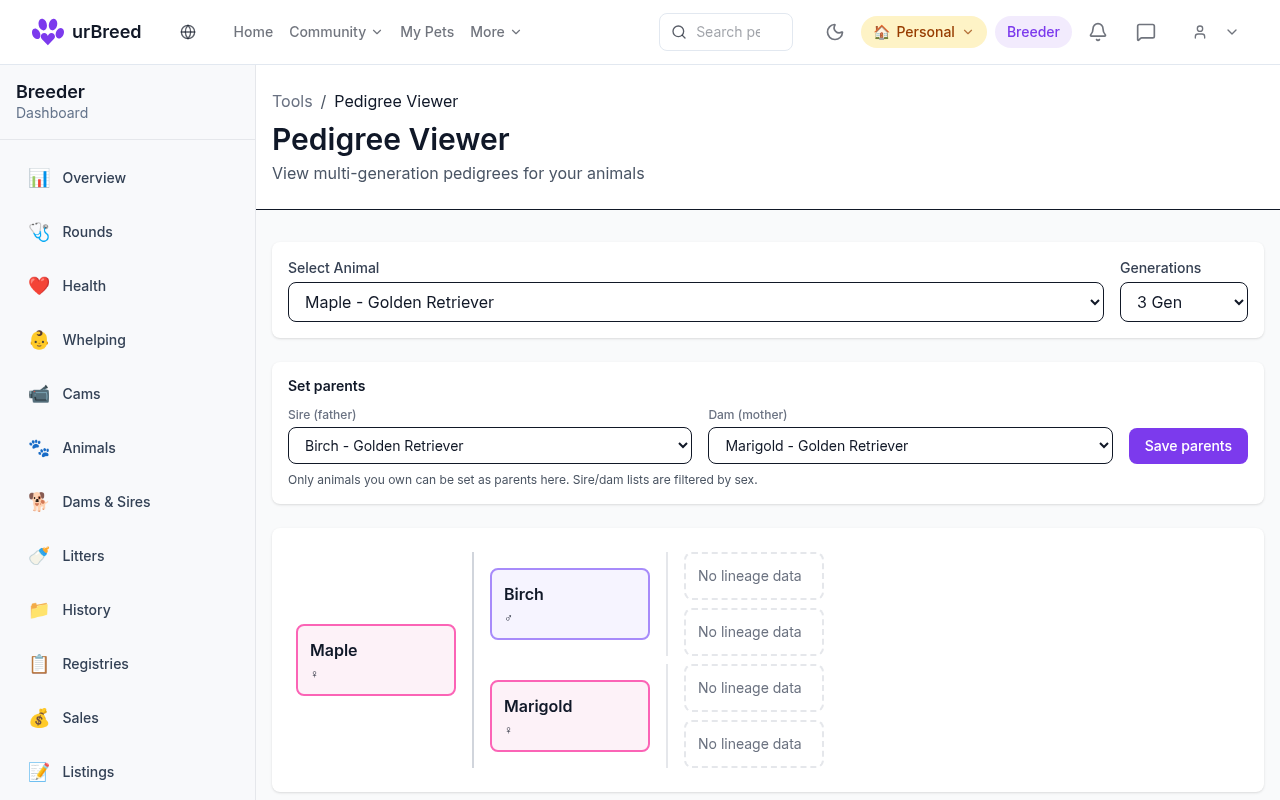
Pedigree
Set a sire and dam once, on the animals, and read the lineage back wherever the animal goes.
Heat cycles
Log each dam’s cycles, signs and notes, and keep the history that breeding decisions depend on.
Health screening checklist
The hip, elbow, eye, cardiac and DNA screenings a breeding animal is expected to have, tracked per animal.
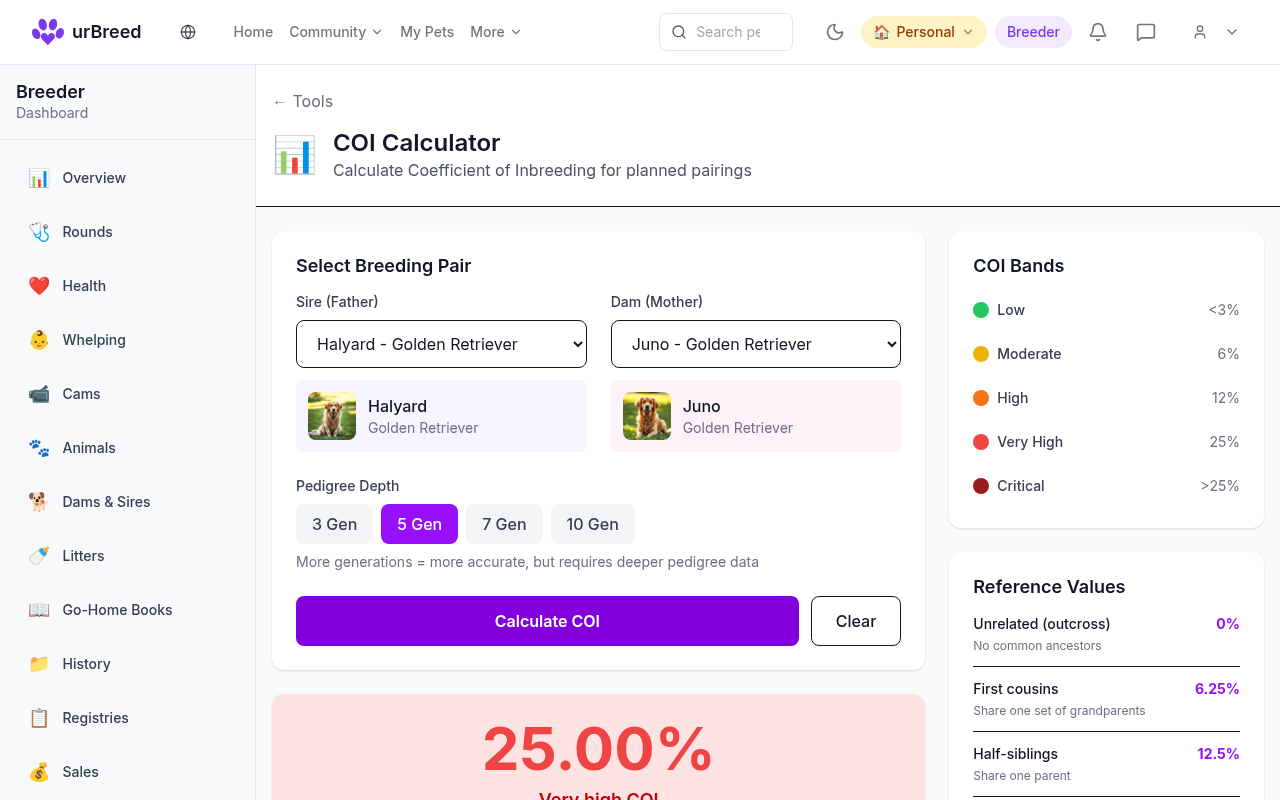
Inbreeding coefficient
COI for a planned pairing, computed from the pedigree you have recorded, with how many ancestors it could actually see. A thin pedigree is flagged, never read as a safe pairing.
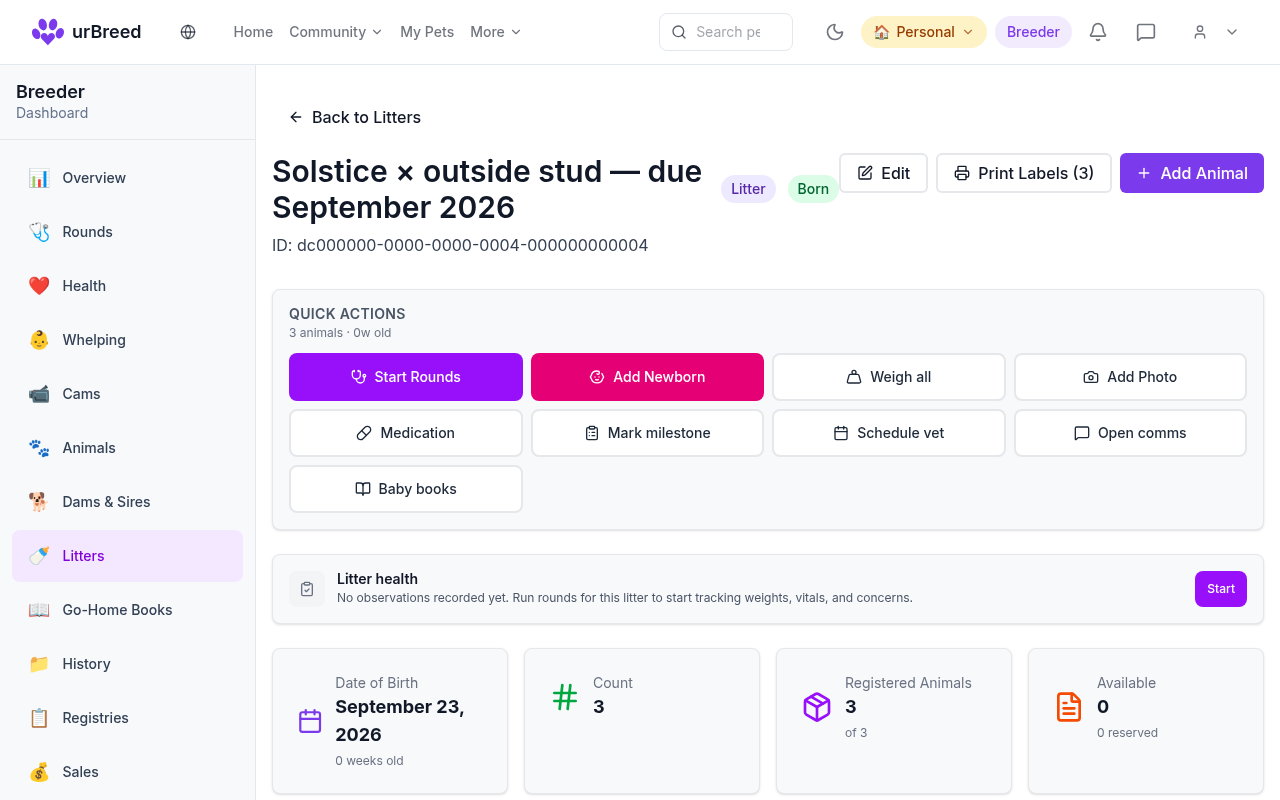
Litter planning
Record a planned pairing with its breeding and due dates, before there are puppies to count.
Whelping sessions
A field session for the night a litter arrives: add each newborn as it comes, and each one is registered on the litter when the session ends.