urBreed

Breed with the record to prove it.

Lineage, heat cycles, health screening and placement — kept on each animal’s own lifelong record, so the care you put into a dog or cat before it leaves you is still there when its next veterinarian opens the file.

Saying it is not the same as showing it

Every breeder’s website says the parents are health tested. What a careful buyer actually wants is the record: which test, which laboratory or veterinarian, what it found, and which animal it belongs to.

Your observations

Heat dates, signs and notes you record yourself are kept as yours — a breeder’s observation, not a clinical finding.

Clinical findings

What a veterinarian records is attributed to that veterinarian. The two stay distinguishable by who recorded them.

One animal, one record

Lineage and health history attach to the animal itself, not to a spreadsheet only you can see.

The whole kennel, one record per animal

Every dam, sire and dog you have bred, with its breed, age and photograph — and behind each card, the same lifelong record its veterinarian and its next family will read.
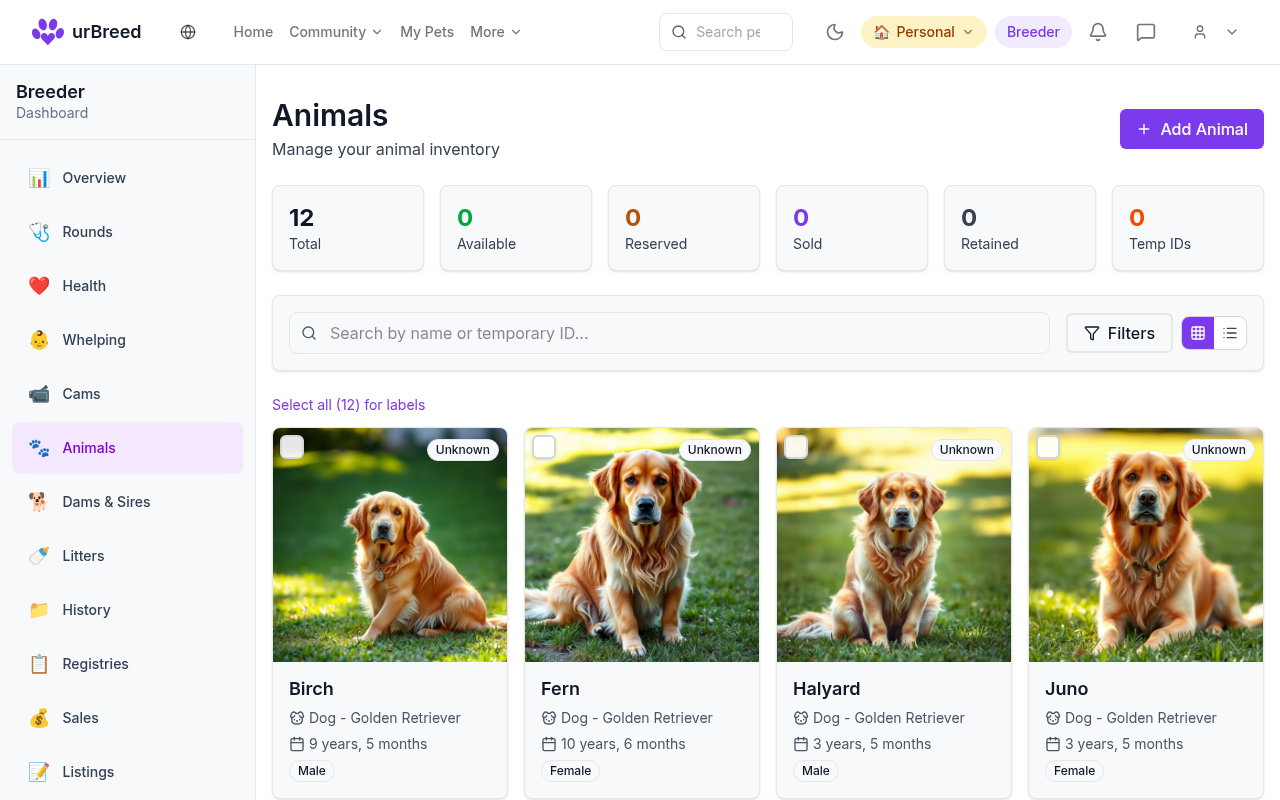
The urBreed Animals view for a Golden Retriever program: twelve dogs shown as photo cards with name, breed, age and sex, above counts of total, available, reserved, sold and retained animals
The Animals view for a demonstration Golden Retriever program.

Tools for the decisions that matter

Planning a pairing is a welfare decision before it is a commercial one. The tools are built around the questions a responsible breeder asks first.
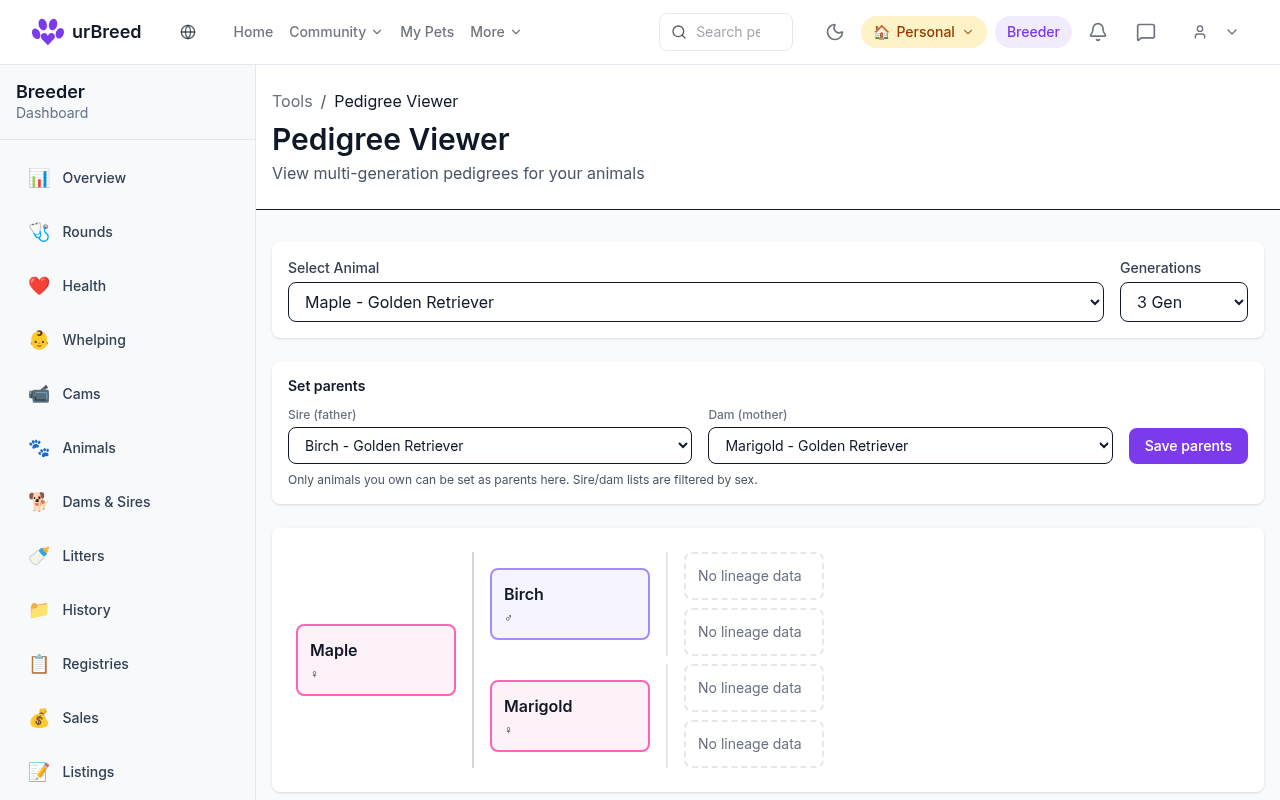
The urBreed pedigree viewer showing a Golden Retriever named Maple with her sire Birch and dam Marigold, and empty slots where earlier generations have not yet been recorded
Lineage is recorded on the animals themselves. Unrecorded ancestors are shown as unrecorded, not guessed.

Pedigree

Set a sire and dam once, on the animals, and read the lineage back wherever the animal goes.

Heat cycles

Log each dam’s cycles, signs and notes, and keep the history that breeding decisions depend on.

Health screening checklist

The hip, elbow, eye, cardiac and DNA screenings a breeding animal is expected to have, tracked per animal.

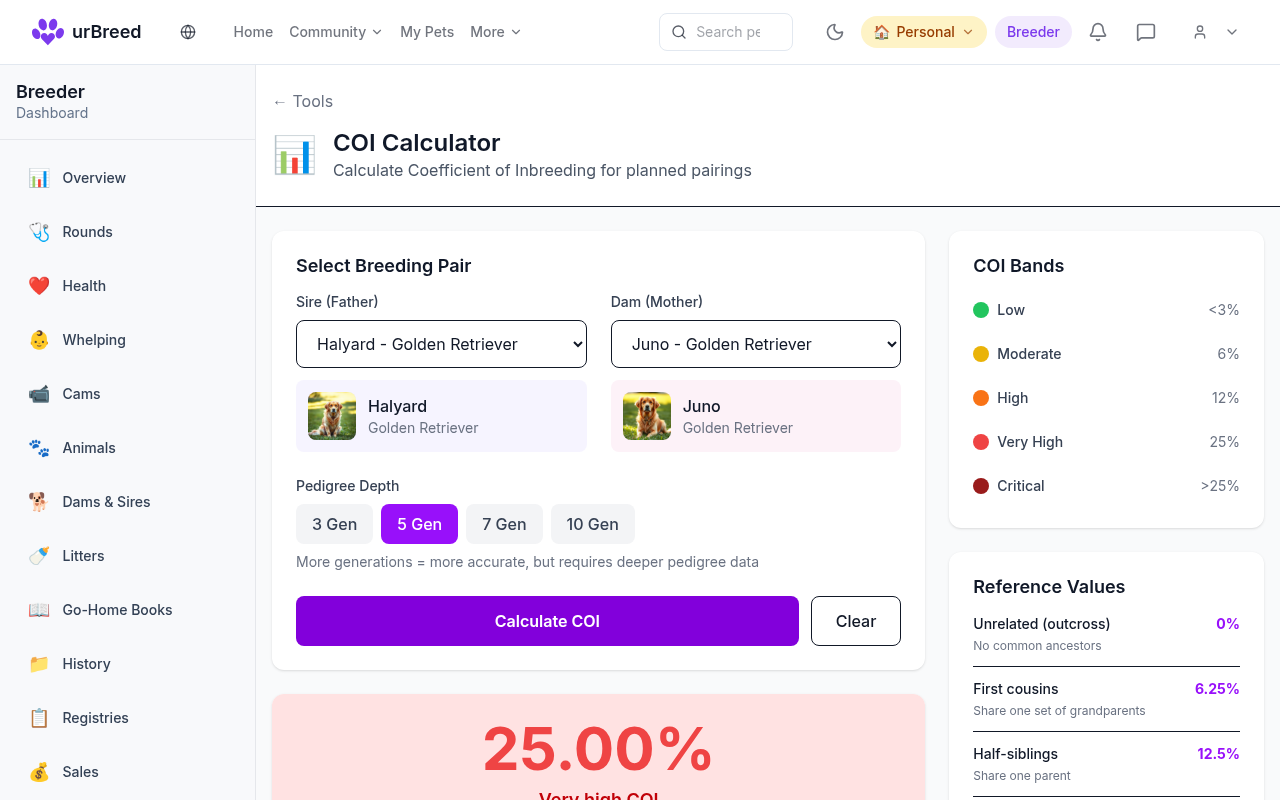
Inbreeding coefficient

COI for a planned pairing, computed from the pedigree you have recorded, with how many ancestors it could actually see. A thin pedigree is flagged, never read as a safe pairing.

Litter planning

Record a planned pairing with its breeding and due dates, before there are puppies to count.

Whelping sessions

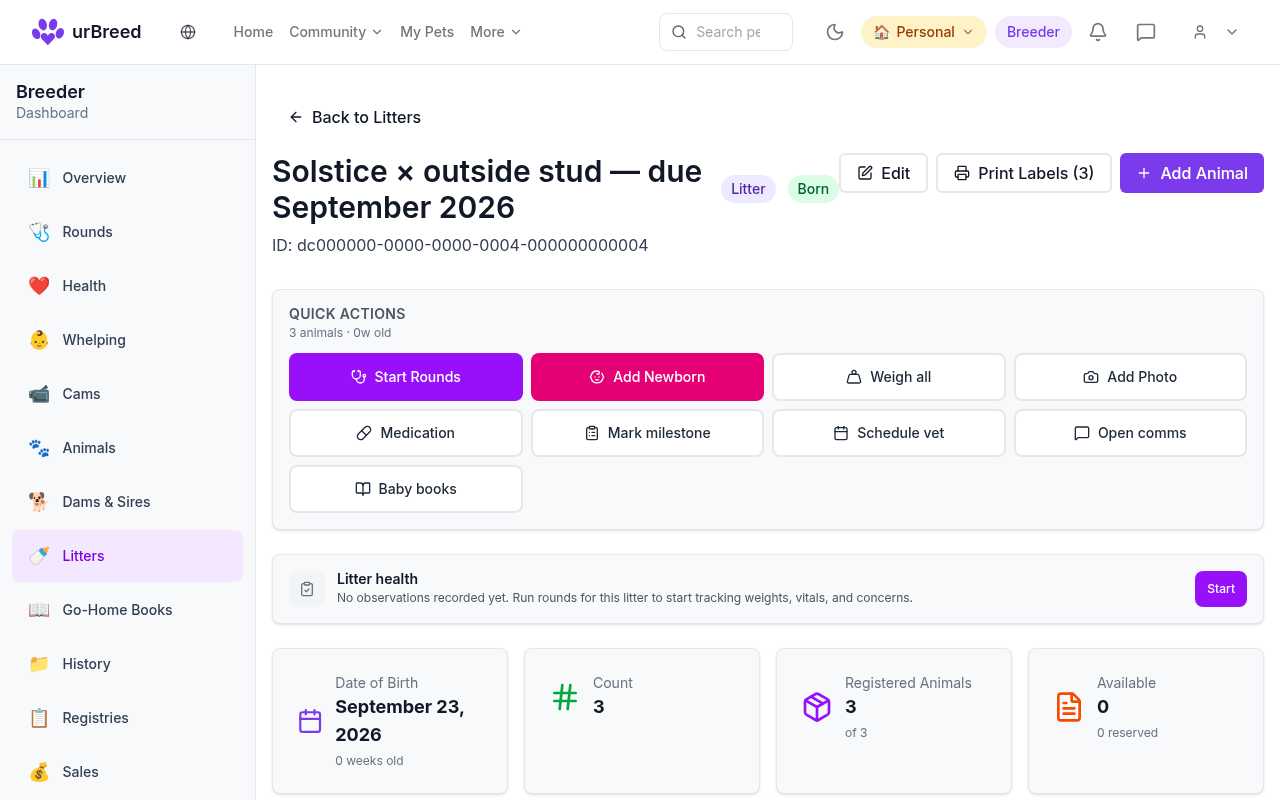
A field session for the night a litter arrives: add each newborn as it comes, and each one is registered on the litter when the session ends.
The urBreed COI calculator for two full siblings, Halyard and Juno, showing a coefficient of inbreeding of 25 percent labelled very high, beside the COI bands and reference values
Full siblings, calculated from the recorded pedigree: 25%, very high.
A born litter in urBreed after a whelping session: date of birth September 23, 2026, count 3 and 3 registered animals, with quick actions for rounds, newborns, weights and go-home books
A litter after its whelping session: every newborn registered on the litter's record.

From litter to a new home

Listings, applications and the sale contract — so a placement becomes a recorded event on the animal, not a conversation that ends when the car leaves the driveway.

Listings and applications

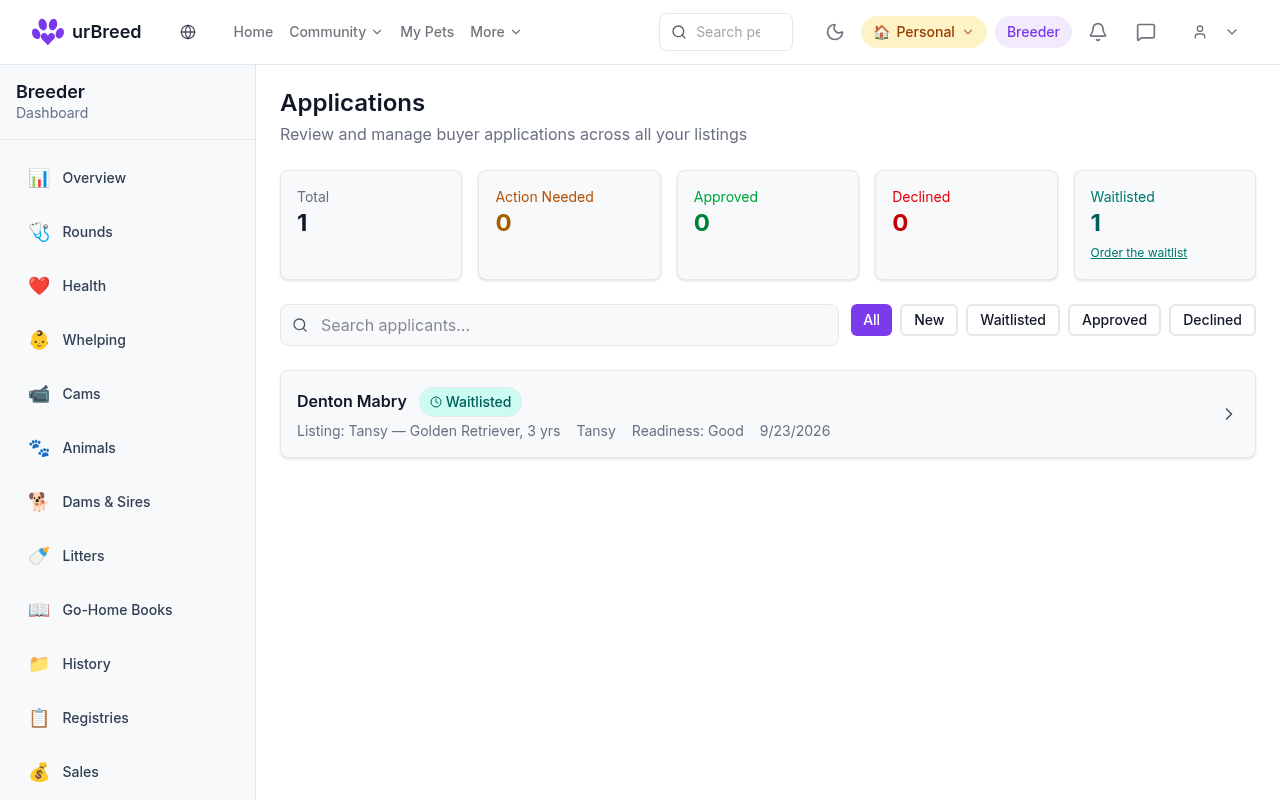
Publish a listing, take applications against it, and review them in one queue — approve, decline or waitlist. Families acknowledge the animal’s care commitments before they can apply.

Sale contracts

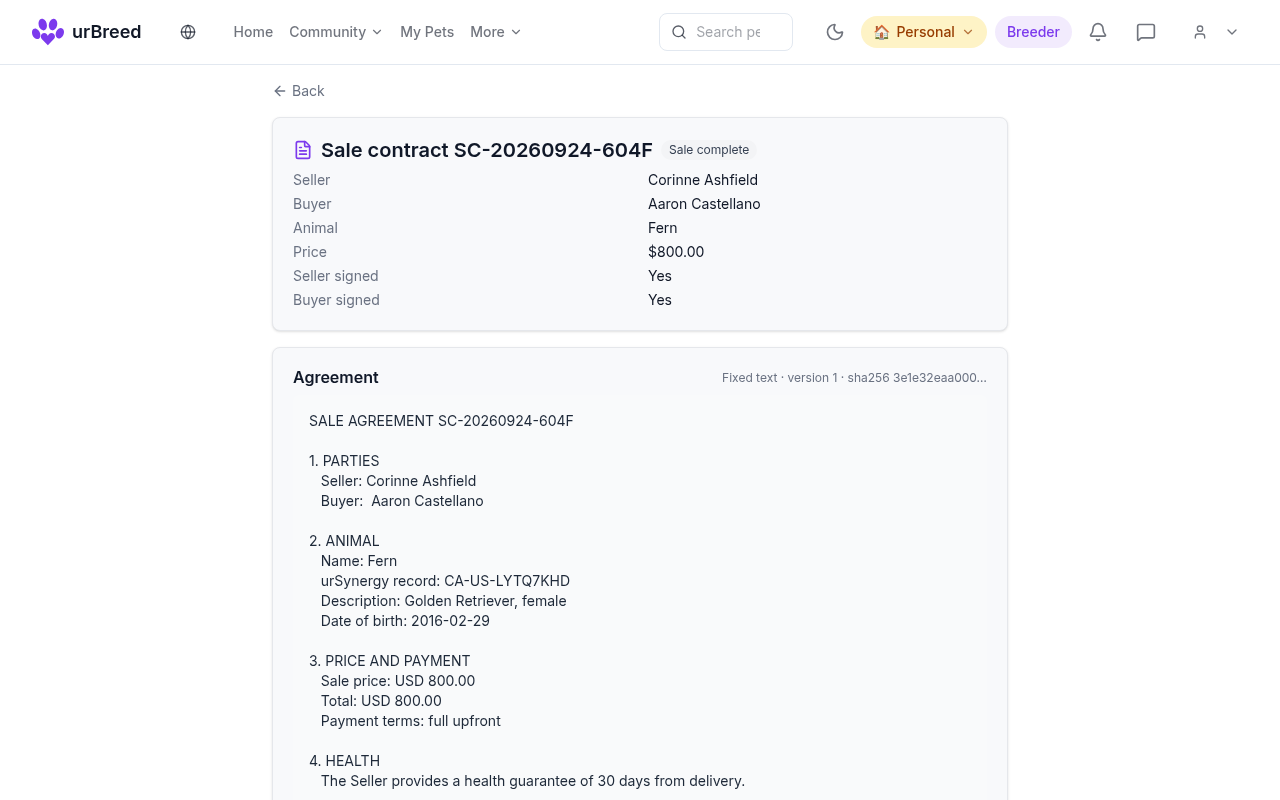
The agreement is drawn up, signed by you and by the buyer, and its exact text is fixed and kept with the placement it governs.

The record goes home too

Completing the sale transfers the animal on its record, so the new family opens its history in their own account — your part of the story ends, and is kept, rather than being erased.
The urBreed applications queue for a breeder: one application from a family for a Golden Retriever listing, marked waitlisted, with readiness shown as good and filters for new, waitlisted, approved and declined
Applications arrive in one queue, with the family's readiness alongside.
A completed urBreed sale contract: seller Corinne Ashfield, buyer Aaron Castellano, the animal Fern, a price of 800 dollars, both parties signed, and the agreement's fixed text identified by version and sha256 hash
A completed sale: both signatures, and the exact text they signed, fixed by its hash.

A go-home book for every animal

When a puppy or kitten leaves, the family gets its story rather than a folder of photocopies: a book built from the animal's own record, which they can open from a link and keep.

Filled from the record

Name, breed, birth date, parents and the birth milestone come from the animal’s record; you add photos, milestones and care guides.

A link the family keeps

Share a private link that opens without an account, or send it to the new owner by email from the book itself.

Only your part of the story

Health history is copied in only while the animal is still in your care — a placed animal’s later veterinary records stay with its new family.
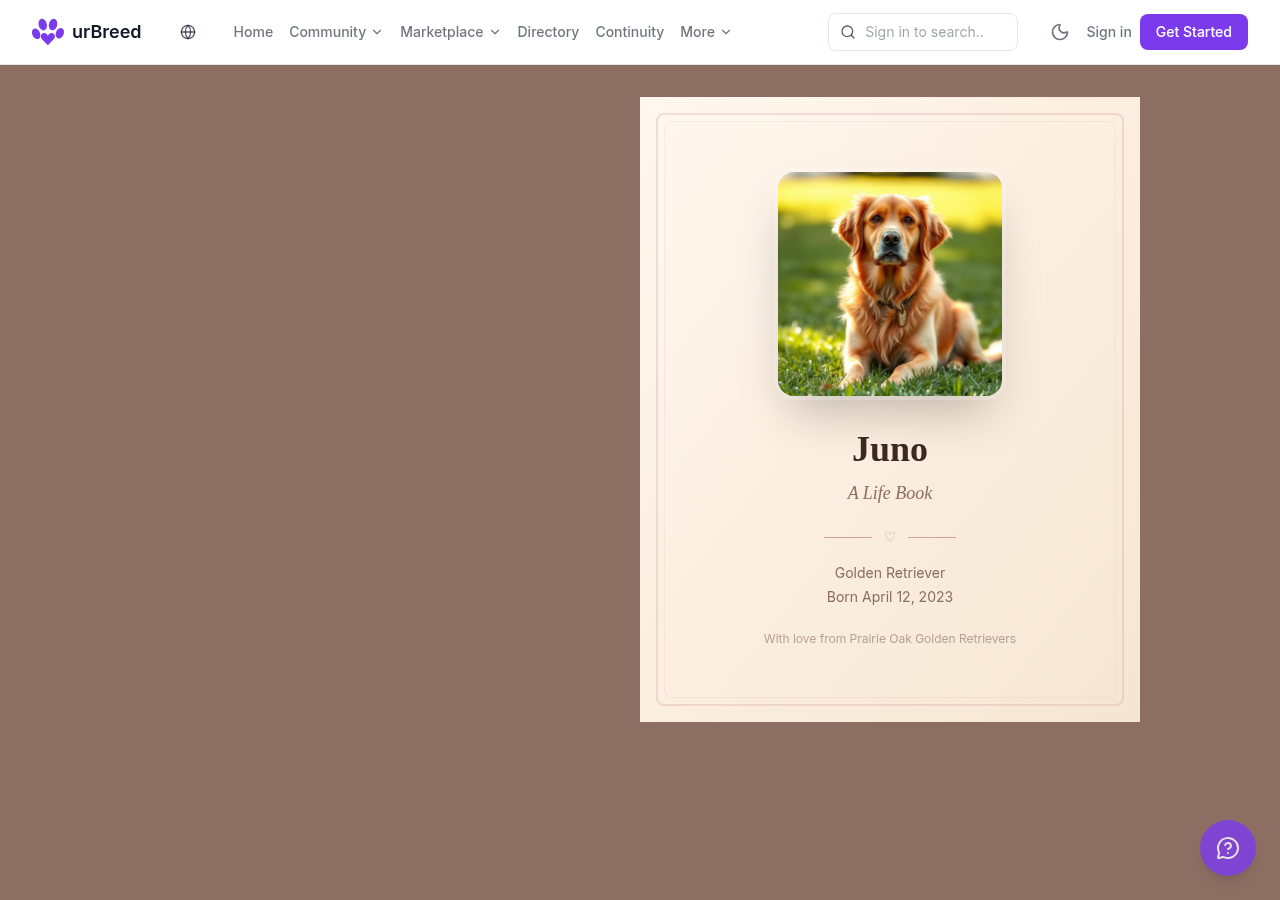
The cover of a go-home book opened from a share link without signing in: a photograph of a Golden Retriever named Juno, the words A Life Book, her breed, her birth date, and With love from Prairie Oak Golden Retrievers
What the family opens: the book, from a link, no account needed.

Working with your veterinarian

The breeder sees the breeder workflow. The veterinarian sees the clinical workflow. Both contribute to the same record — neither keeps a private copy of the other’s.

Veterinary partners for your program

Planned

Name the reproductive, general-practice and emergency veterinarians your program works with, and send them requests from the breeder workspace.

Your view ends when the animal is placed

Planned

Breeding history stays part of the animal’s record. The new steward’s later veterinary care does not become visible to the breeder because of it.

Dogs and cats, in depth

urBreed is built for dog and cat breeding programs. Other species have their own home in the ecosystem, on the same account, because a macaw or a mare needs different husbandry — not a renamed dog form.